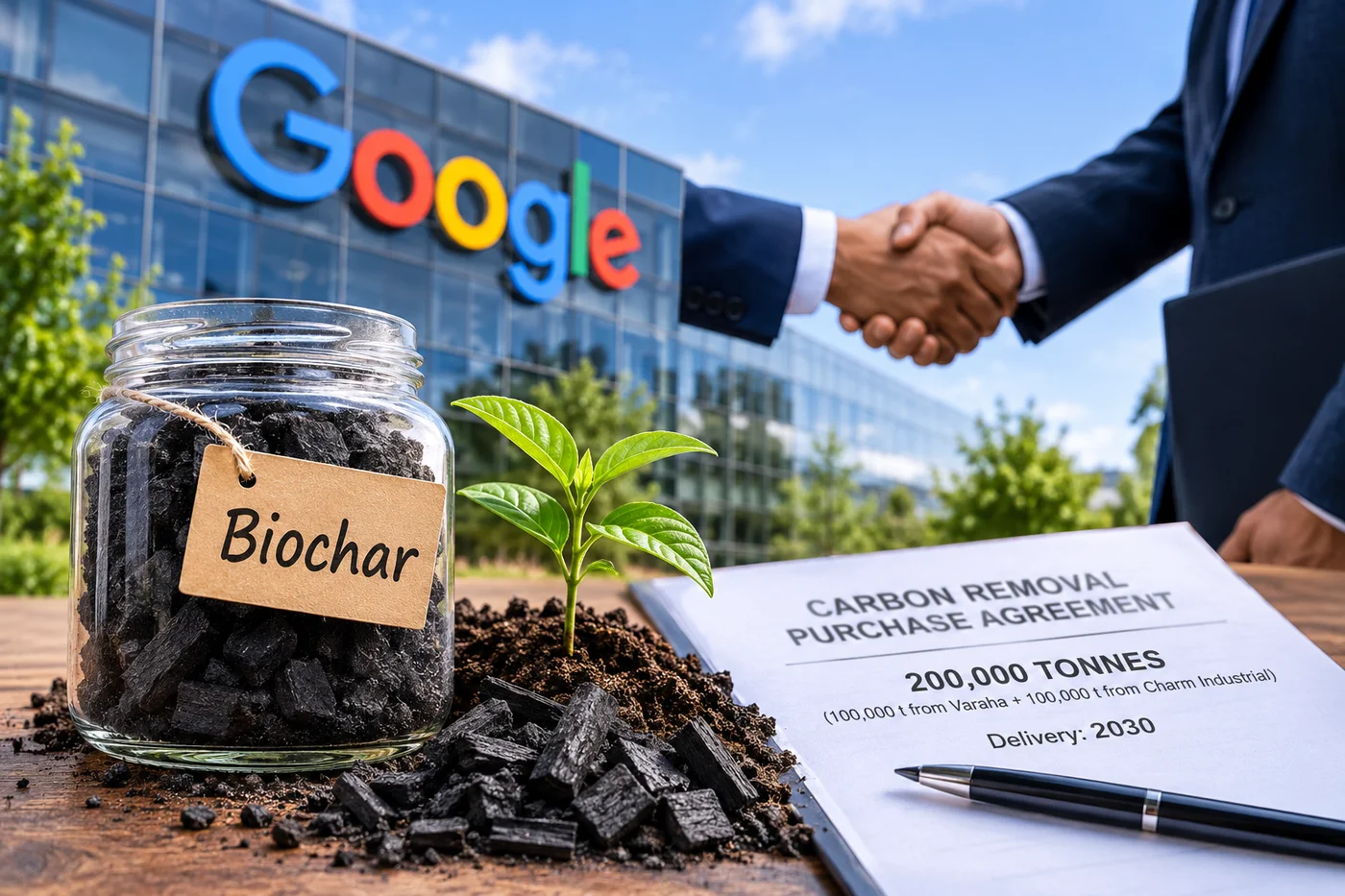
There is a big difference between telling the world you can remove carbon and convincing one of the world's largest technology companies to pay you to do it.
One requires a compelling idea. The other requires evidence, operational discipline and the ability to deliver on a promise that could stretch across several years.
In January 2025, Google made an announcement that caught the attention of the carbon removal industry. It signed two long term purchase agreements: 100,000 tonnes of biochar carbon removal from Indian company Varaha and another 100,000 tonnes from US-based Charm Industrial, with deliveries planned through 2030.
For an industry still working to establish itself in the global carbon market, this was significant. But the interesting part isn't simply the number of tonnes involved. It is what a commitment of that size tells us about the expectations surrounding large scale carbon removal.
Because when a company is prepared to make a purchase of this magnitude, the conversation goes far beyond how much biochar a supplier can produce.
Before the Biochar, There Is the Biomass
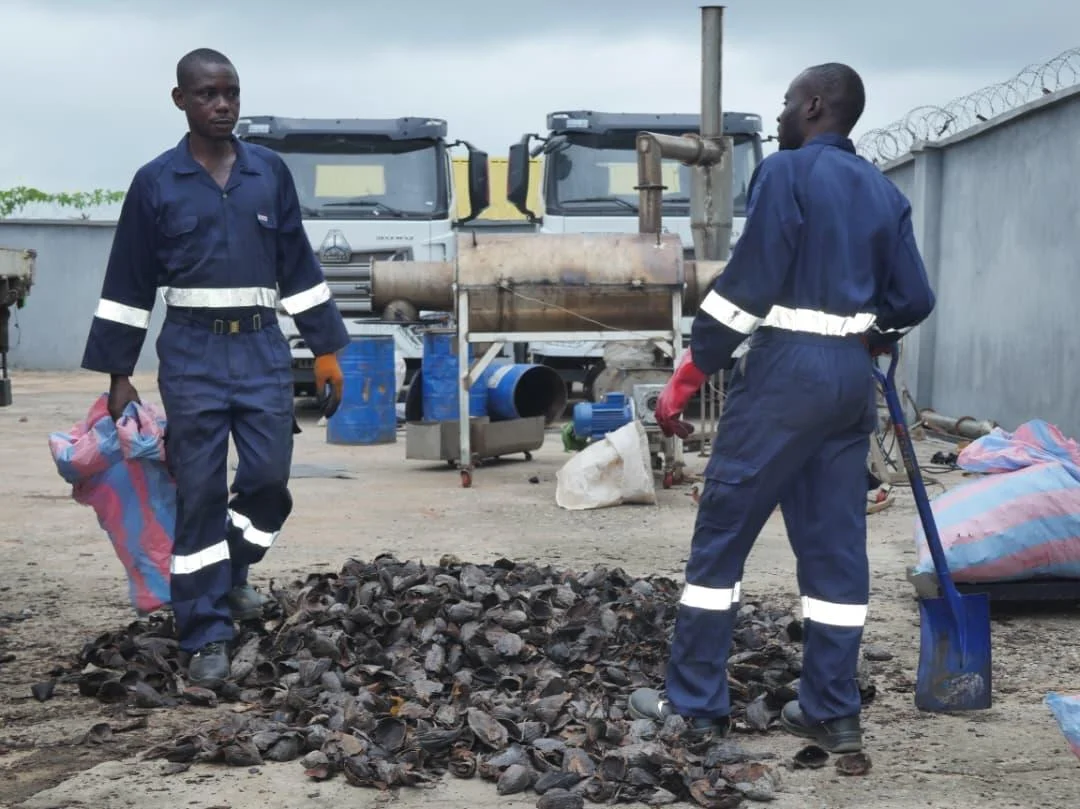
Imagine approaching a potential buyer with an impressive production target. You explain your technology, show them your facility and present the amount of carbon you expect to remove.
Then comes a seemingly simple question: Where will all the biomass come from?
It is a question that can quickly change the direction of the conversation.
Biochar production depends on a reliable supply of suitable organic material. Agricultural residues, forestry by-products and other biomass streams can offer opportunities, but their availability, characteristics and existing uses must be properly understood.
A buyer considering a long-term agreement would reasonably want to know whether the proposed feedstock can support production at the promised scale. Is it available throughout the year? How is it currently handled? Will collecting it require extensive transportation? Could competing uses affect future supply?
These details matter because a production target is only as realistic as the resources supporting it.
Varaha's Google-backed project offers an interesting example. Rather than relying on a generic biomass supply, the company is using Prosopis juliflora, an invasive plant species in Gujarat, India, as feedstock for its industrial biochar facility. The project also aims to support the restoration of native grasslands.
It is a reminder that successful biochar projects begin with understanding the material available and the environment in which it exists.
Producing Biochar Is One Thing. Producing It Consistently Is Another.
A facility can successfully produce biochar without necessarily being ready to fulfil a large corporate contract.
At a larger scale, consistency becomes just as important as production capacity.
The conditions inside a pyrolysis system influence the characteristics of the resulting biochar. Temperature, moisture conditions, oxygen availability and processing time all need to be managed appropriately.
If production varies significantly between batches, maintaining product quality and meeting carbon removal requirements becomes more challenging.
This is where operational knowledge becomes particularly valuable. Producers must understand their equipment, the behaviour of their feedstock and the conditions required for reliable carbonisation.
They must also consider whether their infrastructure can support increased production without compromising quality.
For a corporate buyer, confidence comes from knowing that a supplier can move beyond an impressive pilot or a promising projection and establish a dependable production system.
Where Is the Proof That Carbon Has Actually Been Removed?
Here is where the conversation becomes even more interesting.
Producing a tonne of biochar does not automatically mean a tonne of carbon dioxide has been removed from the atmosphere.
The amount of stable carbon in the biochar matters, as do the emissions generated during feedstock collection, transportation, processing and final application.
This is why monitoring, reporting and verification (MRV) are such important parts of the carbon removal industry.
A credible project needs to document its feedstock sources, production activities, biochar characteristics and final use. Its carbon removal calculations must account for relevant emissions and follow an appropriate methodology.
Independent verification helps establish that the claimed carbon removal is supported by evidence rather than estimates alone.
For buyers making substantial long-term commitments, this distinction is crucial. They need to know what they are purchasing, how the removal is calculated and whether the results can be independently substantiated.
The story behind the biochar may attract attention, but the evidence is what gives the carbon removal claim credibility.
A Contract Is Also a Promise to Deliver
There is another side to large carbon removal agreements that is easy to overlook: the years of work that follow the announcement.
Google's agreements were structured around delivery through 2030. That means the suppliers must maintain the operational capacity, feedstock arrangements and verification processes needed to fulfil their commitments over time.
Equipment breakdowns, changes in feedstock availability, transportation challenges and production costs can all affect delivery.
A serious supplier must therefore think beyond the initial production target. It needs a realistic understanding of its resources, operational limitations and ability to grow.
This is particularly important in an industry where enthusiasm can sometimes run ahead of actual production capacity.
What This Means for the Biochar Industry
Google's agreements with Varaha and Charm Industrial offer an important signal: major corporate buyers are willing to make substantial commitments to biochar carbon removal.
But they also highlight something that every aspiring supplier should understand. The opportunity is not simply about producing more biochar. It is about building a reliable system around it.
At Biochar Industrial Group, this starts with understanding the biomass available at agricultural and industrial facilities, assessing its characteristics and exploring whether it can be converted into biochar through a technically and commercially viable process.
Every potential partnership begins with questions about the material, its volume, its current use and the practicalities of processing it.
That groundwork matters because the future of biochar will not be built on production promises alone.
It will be built by businesses that understand their feedstock, know their processes, can demonstrate their carbon removal claims and have the capacity to deliver what they promise.
After all, securing a 100,000-tonne contract may make headlines. Being able to deliver those tonnes is what makes the story worth telling.
References
- Google (16 January 2025) https://blog.google/feed/were-announcing-our-first-partnerships-to-scale-biochar-for-co2-removal/?utm
- Reuters (16 January 2025) https://www.reuters.com/technology/google-signs-deal-buy-carbon-removal-credits-indian-farms-2025-01-16/?utm
- Verra. Biochar Methodology https://verra.org/methodologies-main/biochar-methodology-faqs/?utm