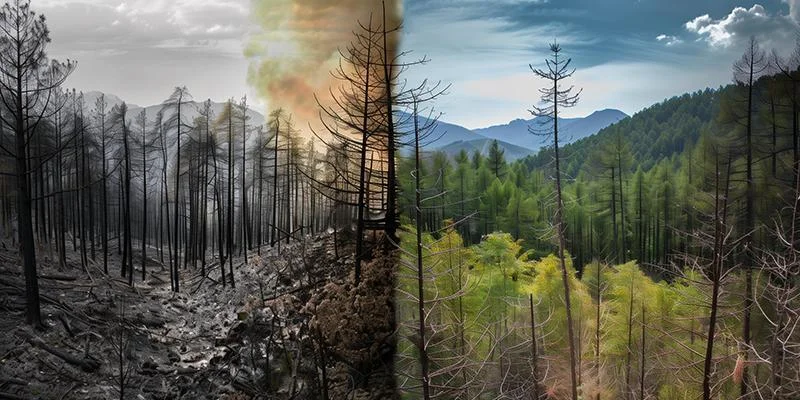
Imagine planting a thousand trees today, watching them grow for twenty years, and then losing a significant portion of that progress to a wildfire.
The trees may have absorbed carbon while they were growing, but what happens when they burn? Some of the carbon stored in their trunks, branches and leaves can return to the atmosphere. Suddenly, the climate benefit that looked so promising comes with a question that is becoming increasingly important in the carbon removal market: how long will the carbon actually stay stored?
This is one reason corporate buyers are looking more closely at durable carbon removal.
For years, companies have supported forestry initiatives, tree planting and other nature based climate projects. These investments remain valuable, particularly for biodiversity, ecosystem restoration and community livelihoods. But as corporate climate commitments become more demanding, buyers are paying greater attention to the difference between storing carbon temporarily and keeping it out of the atmosphere for much longer.
And this is where biochar is attracting attention.
The Problem Isn't Planting Trees. It's What Happens Afterwards.
Forests are extraordinary carbon stores. Through photosynthesis, trees absorb carbon dioxide and store carbon in their trunks, roots, branches and surrounding soil.
Protecting existing forests and restoring degraded landscapes are important parts of climate action. The challenge is that biological carbon storage depends on living ecosystems, which are exposed to changing environmental conditions.
Wildfires, drought, pests, disease and land use changes can all affect how much carbon a forest continues to store. When trees die and decompose, some of their stored carbon is gradually released. When forests burn, carbon can return to the atmosphere much more quickly.
This doesn't mean every forestry project is temporary or unreliable. Well managed forests can store carbon for centuries. The important distinction is that their permanence depends on continued ecosystem health and effective long term protection.
For a company purchasing carbon removal, that introduces a different kind of risk. It must consider not only how much carbon a project stores today, but also what could happen to that carbon decades from now.
A Different Way to Think About Carbon Storage
Biochar approaches the problem from another direction.
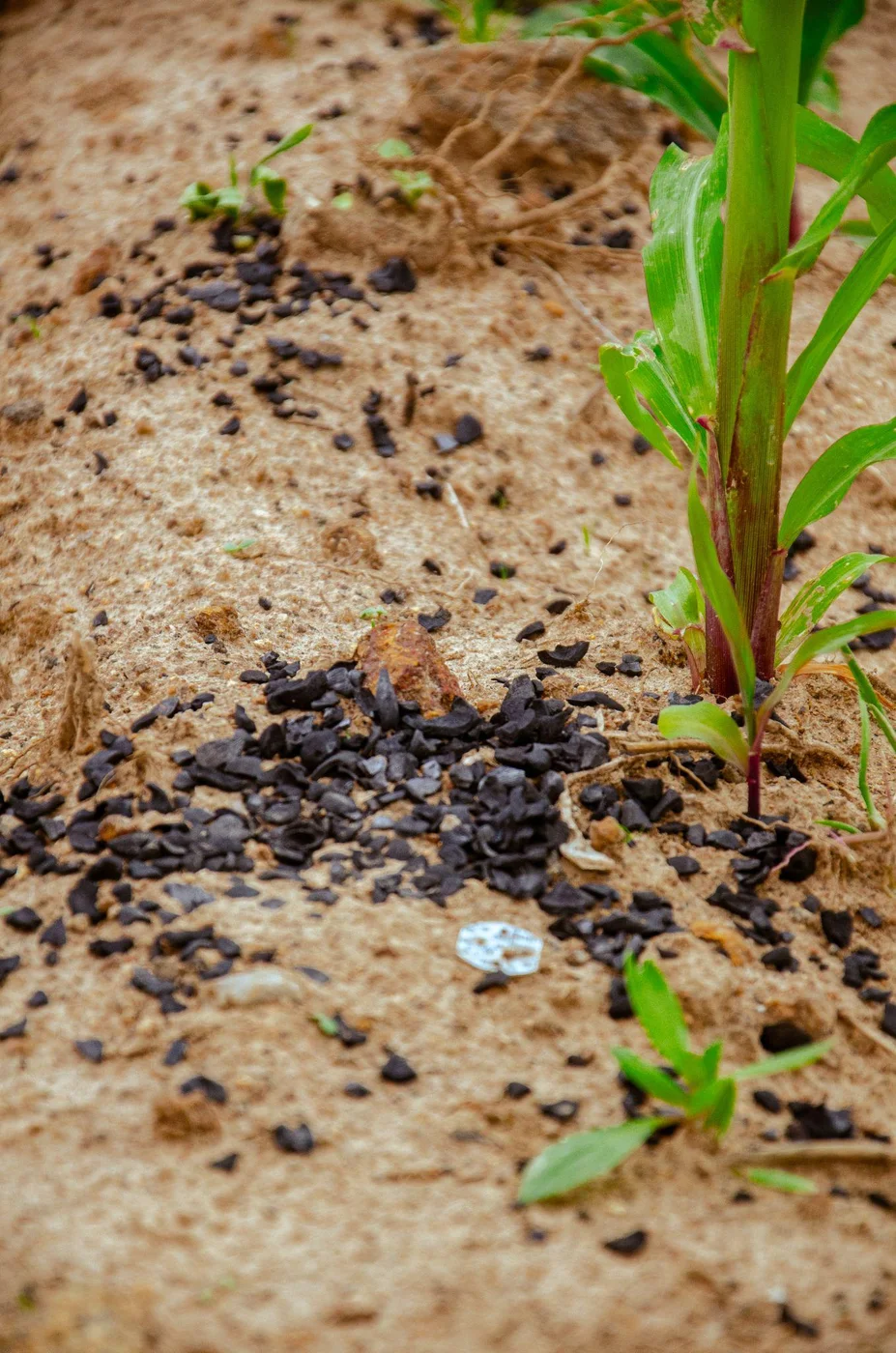
Instead of relying on living trees to hold carbon over time, biochar production takes biomass and converts it into a more stable form of carbon.
The process, known as pyrolysis, involves heating organic material under limited oxygen conditions. This changes the structure of the biomass, producing a carbon rich material that is more resistant to biological decomposition than the original plant material.
When appropriately produced and used, biochar can store carbon for extended periods, with durability estimates supported by scientific research and carbon removal methodologies.
The distinction is important. A tree stores carbon as part of a living biological system. Biochar stores a portion of that carbon in a more stable material that can be incorporated into soil or used in other approved applications.
Under the Puro.earth 2025 biochar methodology, certified biochar carbon removal is recognised with a durability rating of 200 years or more. Other standards, including Verra, use their own accounting approaches and 100-year carbon storage calculations.
This means biochar offers something corporate buyers increasingly value: a measurable, methodology-based approach to long-term carbon storage.
Why Permanence Is Becoming a Bigger Purchasing Decision
For companies making net-zero commitments, the challenge is not simply finding somewhere to direct their climate budgets. It is finding projects that can withstand scrutiny.
A business purchasing carbon removal today wants confidence that the environmental benefit it pays for will still matter decades from now.
That expectation is influencing the market.
Ecosystem Marketplace's 2025 State of the Voluntary Carbon Market report highlighted growing buyer interest in carbon removal, particularly credits offering 100- or 1,000-year storage timelines. It also identified large technology companies as important drivers of demand for more durable removal solutions.
The appeal is understandable. When a company has emissions that cannot yet be eliminated through operational changes, it needs credible ways to address those residual emissions. Carbon removal can form part of that strategy, provided it does not replace direct emissions reductions.
Biochar is increasingly part of this conversation because it offers a pathway to durable storage while making productive use of suitable biomass residues.
Of course, permanence alone does not make a carbon credit high quality. Buyers must still examine feedstock sourcing, production emissions, biochar stability, end use and independent verification. A long storage claim is only meaningful when the project can substantiate it.
The Two Approaches Don't Have to Compete
It is tempting to frame this as a contest between forests and biochar, but that misses an important part of the bigger picture.
Forests provide benefits that extend far beyond carbon storage. They support wildlife, regulate water systems, protect soils and sustain communities. Biochar cannot replace those functions.
Likewise, forestry projects and biochar projects address different aspects of the carbon challenge. One protects and restores natural ecosystems; the other creates a durable carbon storage pathway from suitable biomass.
The question for corporate buyers is increasingly about how to build a climate portfolio that accounts for both environmental impact and storage duration.
And as demand for durable carbon removal grows, biochar has an opportunity to become a more significant part of that portfolio.
Turning Low-Value Biomass into Long-Term Value
There is another opportunity within this shift that deserves attention.
Across agricultural and industrial facilities, significant quantities of biomass residues are generated every day. Some have established uses, while others have limited economic value or create handling and disposal challenges.
With the right assessment and processing approach, suitable materials could become inputs for biochar production and potentially contribute to durable carbon removal.
This is an area of growing interest for Biochar Industrial Group. By understanding the materials available at partner facilities, assessing their characteristics and exploring their suitability for pyrolysis, BIG works towards identifying opportunities to turn underutilised biomass into something more valuable.
The future of carbon removal will require more than choosing between trees and technology. It will require understanding where carbon is stored, how long it stays there and what it takes to make that storage credible.
Because ultimately, removing carbon is only half the story.
Keeping it out of the atmosphere is what makes the difference.