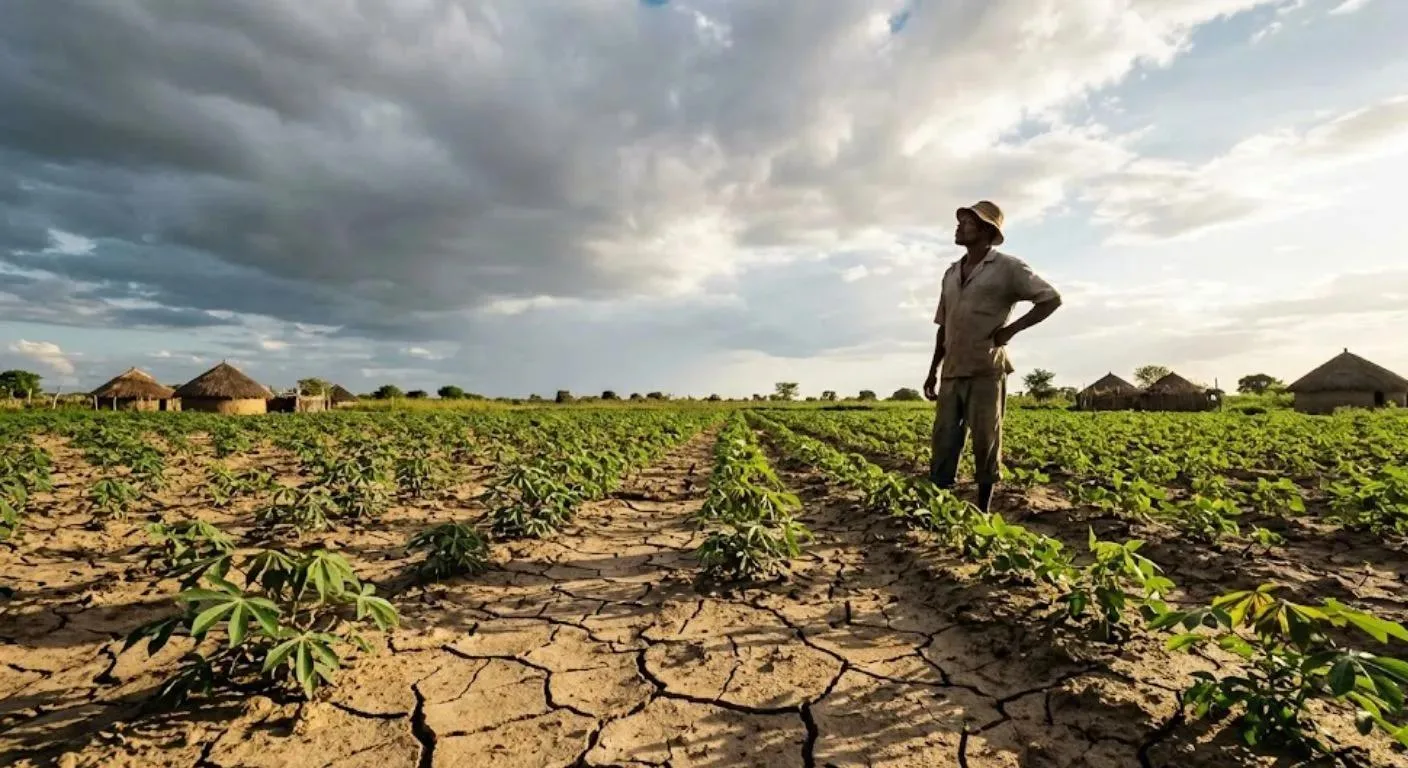
There is a particular moment every farmer dreads. The rain has stopped, the days are getting hotter, and the soil that was moist a few weeks ago is beginning to crack. Crops that looked healthy are starting to struggle. Watering becomes more frequent, but the moisture seems to disappear almost as quickly as it arrives.
For farmers, the problem is not always how much rain falls. Sometimes, it is how much of that water the soil can actually hold on to.
This is an important distinction, particularly as unpredictable rainfall and prolonged dry spells put pressure on agricultural production around the world and it is one reason researchers are paying closer attention to biochar as a possible tool for improving the way agricultural soils manage water.
Not All Soil Holds Water in the Same Way
Think about pouring a bucket of water onto a sandy beach. Much of it disappears quickly beneath the surface. Now imagine pouring that same bucket onto a dense, clay rich patch of ground. The water behaves very differently.This is because soil texture influences how water moves and how much remains available to plant roots.
Sandy soils have relatively large spaces between their particles, allowing water to drain quickly. Clay soils, on the other hand, contain much smaller pores and can hold considerable amounts of water, although some of it may be held too tightly for plants to access easily.
This creates a challenge for agriculture. A field may receive sufficient rainfall, yet its ability to retain and supply moisture to crops can still be limited.
It is not simply about getting water into the ground. It is about keeping enough of it where plants can use it.
How Biochar Changes the Way Soil Holds Water
Biochar offers an interesting approach because of its physical structure.
Produced by heating biomass under oxygen limited conditions, biochar contains a network of pores that can influence how water behaves when it is incorporated into soil.
Imagine a dry sponge with countless tiny spaces throughout its structure. When water comes into contact with it, some of that moisture can occupy those spaces. Biochar is not exactly a sponge, but its porous structure and surface characteristics can help create additional places for water to be retained within the soil.
It can also influence the spaces between soil particles, improve soil aggregation and reduce compaction in certain conditions.
These changes can make a difference, particularly in sandy soils where water would otherwise drain away relatively quickly.
A 2023 meta-analysis examining 939 observations found that biochar had a stronger effect on water retention in coarse-textured soils than in medium and fine textured soils. In coarse soils, field capacity increased by 23.8% and available water capacity by 25.6% on average.
The findings are significant because they show that biochar is not simply adding carbon to the ground. It can also influence the physical environment in which crops grow.
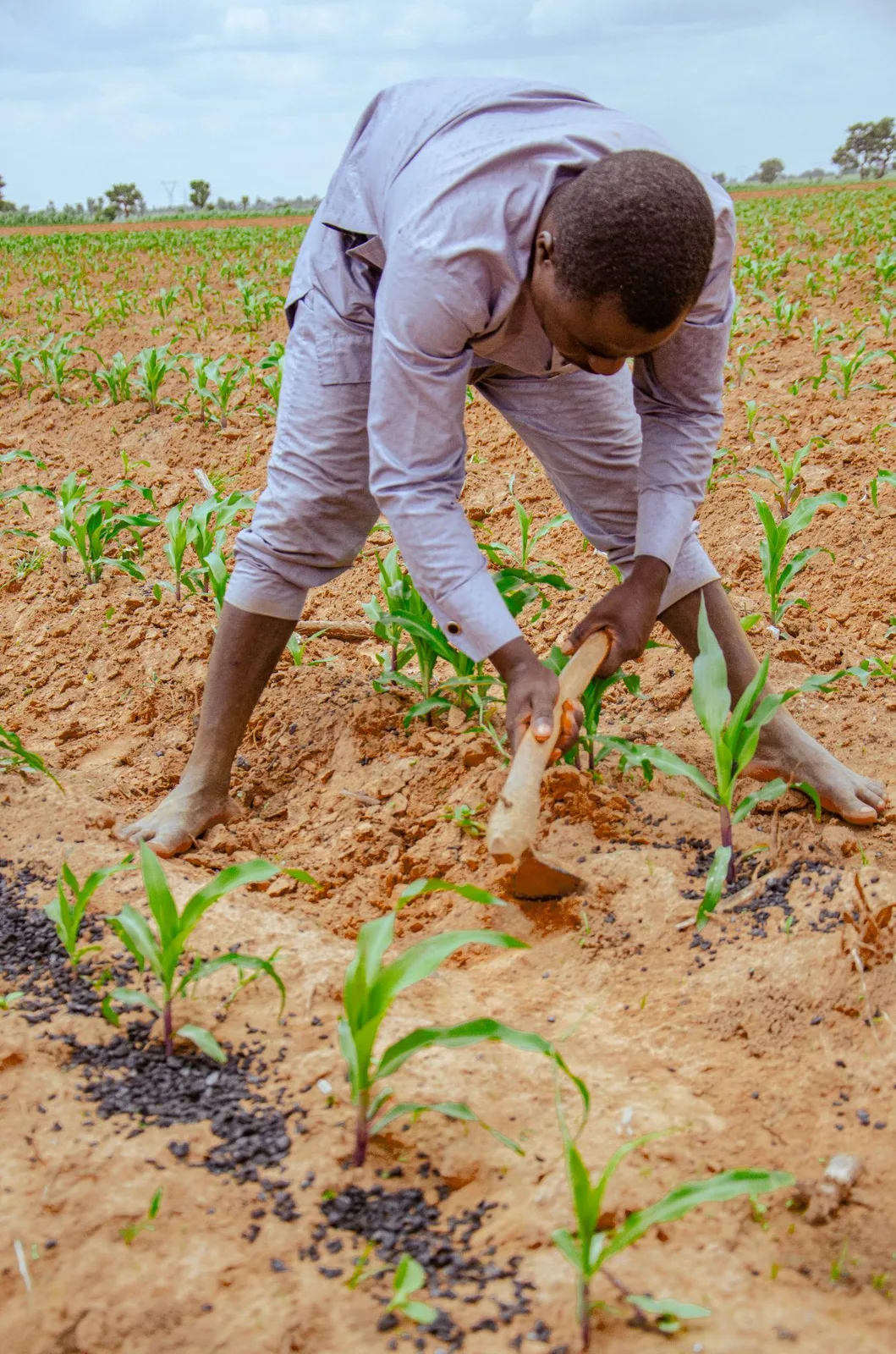
What Happens When the Dry Spell Lasts Longer?
The real value of improved soil water retention becomes easier to understand when rainfall is limited.
After rain or irrigation, soil holds some moisture while excess water drains away. The moisture remaining after this drainage is commonly described as field capacity.
As the soil continues to dry, plants gradually extract the water they need. Eventually, the remaining moisture becomes too difficult for their roots to access. This is known as the permanent wilting point.
The water available to plants lies between these two conditions.
By influencing soil porosity and water retention, suitable biochar amendments can increase the amount of water that remains accessible to crops between rainfall or irrigation events.
A global meta-analysis published in 2022, based on 681 observations, found that biochar application increased plant-available water content by an average of 26.8%. It also reported an average 4.7% improvement in crop water-use efficiency.
This does not mean biochar can replace rainfall or irrigation. Nor does it guarantee that crops will survive every prolonged drought. Rather, it suggests that improving the soil's ability to store and supply moisture can give crops a better chance of managing periods when water is limited.
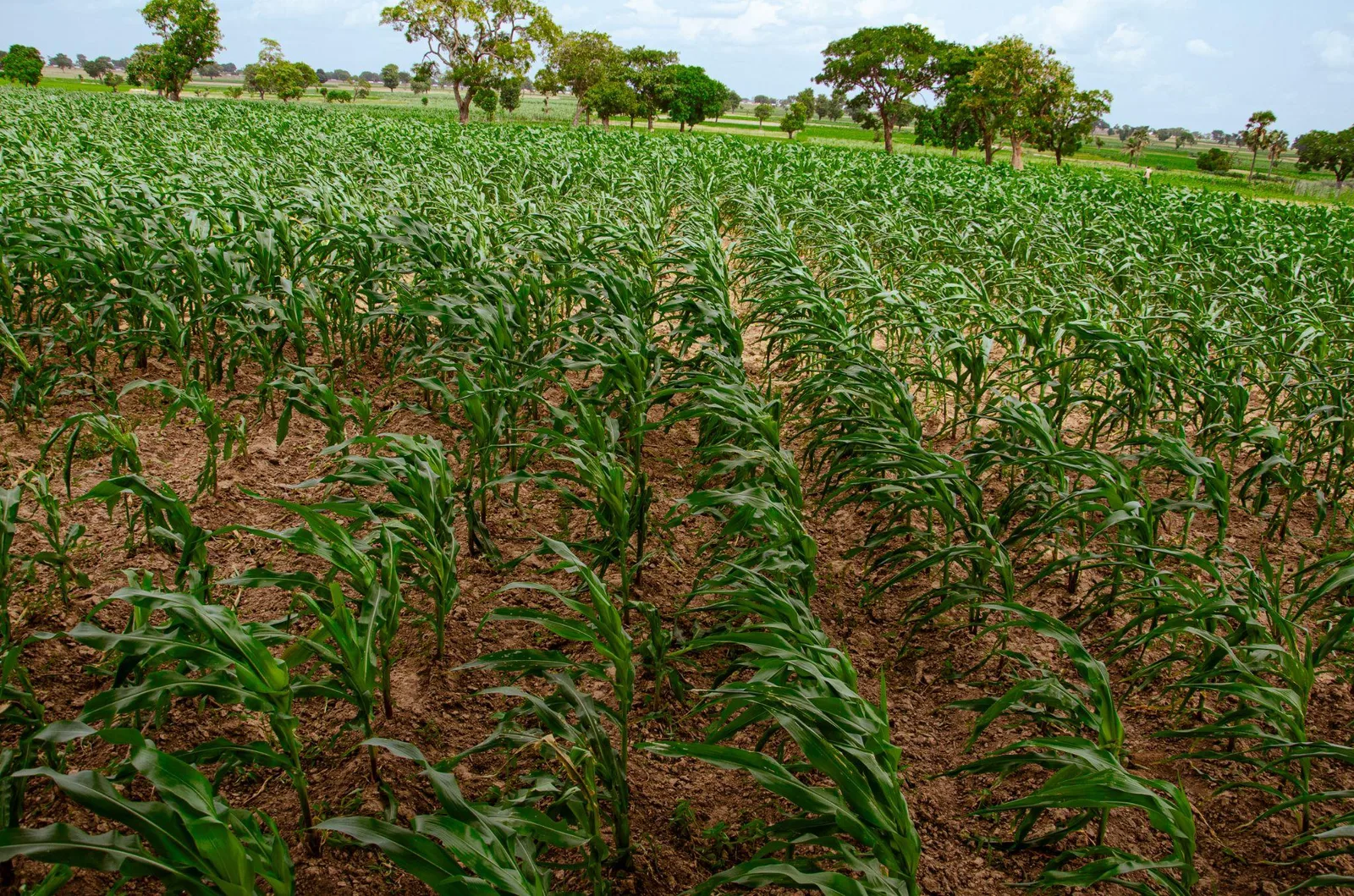
The Important Detail: Not Every Biochar Works the Same Way
There is no universal biochar application that will produce identical results in every field.
Its effectiveness depends on several factors, including the original biomass, production conditions, particle size, application rate and the soil receiving it.
A biochar that performs well in sandy soil may not produce the same results in clay-rich soil. Even two biochars made from different biomass materials can behave differently because their pore structures and surface properties are not necessarily the same.
This is why soil assessment and appropriate application trials matter.
A 2025 meta-analysis of field experiments covering between one and ten years found that biochar's effects on soil hydraulic properties varied with feedstock, application rate and soil texture. It also found that some improvements changed over time, reinforcing the need to consider long term field performance rather than relying entirely on short term trials.
For farmers and agricultural businesses, the practical lesson is simple: biochar should be matched to the soil and the problem being addressed, not applied on the assumption that every field needs the same treatment.
Looking at Agricultural Residues Differently
There is another interesting connection between biochar and agriculture.
Many farming and processing operations generate biomass residues that have limited economic value or require careful handling. Depending on their characteristics and existing uses, some of these materials may offer an opportunity for biochar production.
At Biochar Industrial Group, understanding these materials is an important starting point. By assessing available biomass, examining its suitability for processing and exploring its potential for pyrolysis, BIG works towards identifying opportunities to turn underutilised residues into valuable biochar.
The conversation around biochar is often focused on carbon removal, but its potential contribution to soil management deserves attention too.
As farmers face increasingly difficult decisions about water, soil conditions and crop production, solutions that help agricultural land make better use of available moisture will become increasingly important.
Rainfall may not always arrive when it is needed, but improving the soil's ability to hold on to water could make the difference between losing moisture quickly and giving crops more time to use it.