Two factories can receive identical agricultural residues, use pyrolysis to convert them into biochar and still end up with products that have very different properties. The reason lies in what happens between the arrival of the biomass and the moment the finished product leaves the facility.
Imagine two factories receiving truckloads of the same agricultural residue. The material comes from the same source, has similar characteristics and is destined for the same purpose: biochar production, yet, when the finished products are examined, the differences become difficult to ignore.
One may have a higher carbon content, another may retain more volatile matter. Their pore structures, ash content and ability to interact with their intended applications may also differ.
How can two factories start with essentially the same material and end up with such different products?
The answer reveals something important about biochar production: the quality of the finished product is not determined by the biomass alone. It is also shaped by the decisions, technology and conditions involved in converting it.
The transformation is more complicated than it looks
Biochar is produced through pyrolysis, a process that heats organic material in an oxygen limited environment. As the biomass decomposes, it releases gases and vapours, leaving behind a carbon-rich solid.
Although the basic principle sounds straightforward, the transformation involves several chemical and physical changes.
Biomass is not simply heated until it turns black. Its organic components break down at different stages, and the conditions under which this happens influence the composition and structure of the resulting biochar.
For example, pyrolysis temperature can significantly influence the final product. At lower temperatures, biochar generally retains more volatile matter and may contain more of the original functional groups. Higher temperatures typically produce a more carbonised material, often with greater aromatic carbon content and changes in pore structure.
Neither outcome is automatically superior. The most suitable characteristics depend on the intended application.
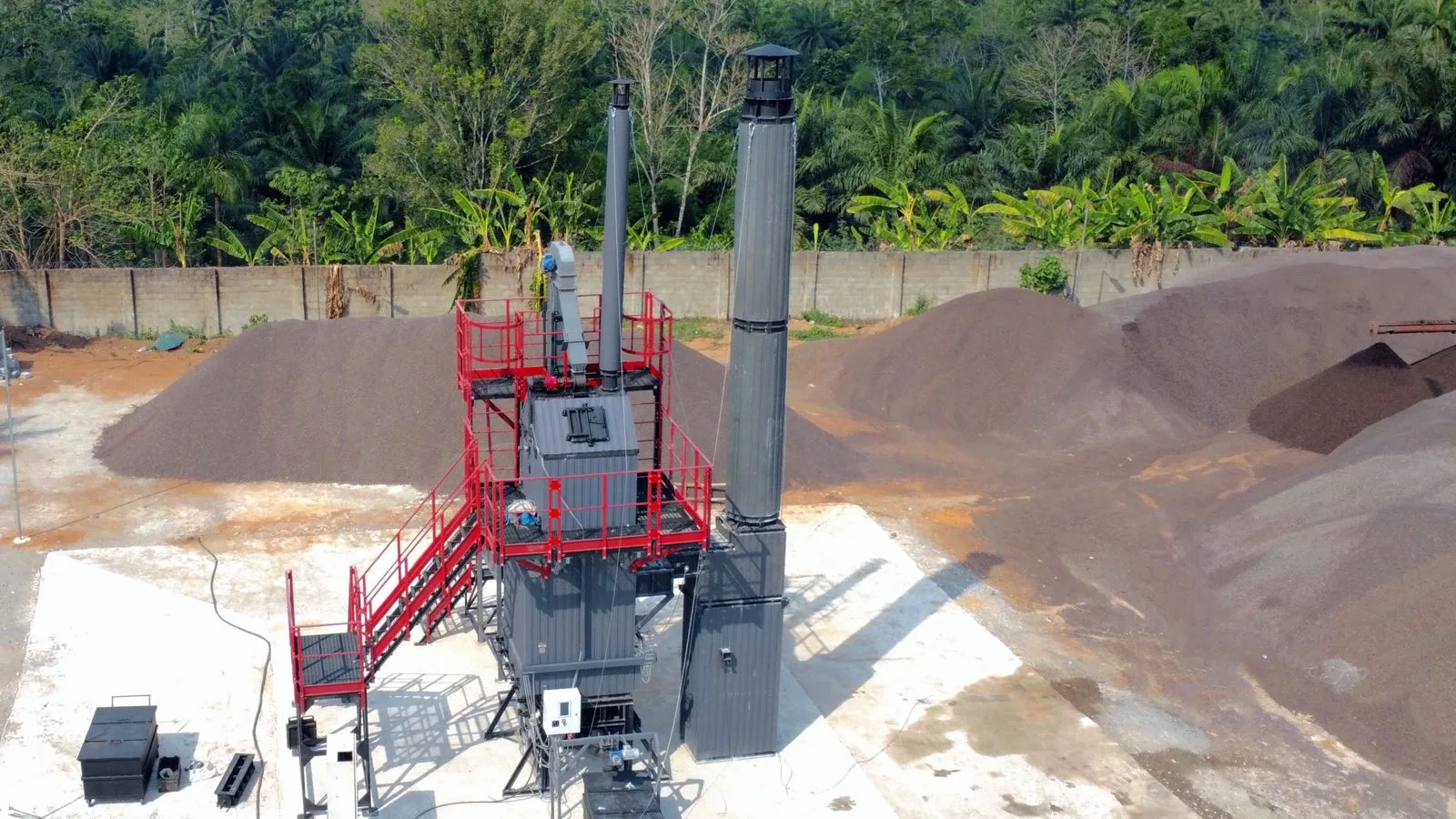
A biochar developed for agricultural use may have different performance requirements from one being investigated for industrial filtration or long term carbon storage.
This is where the production process begins to matter.
Inside the factory, small differences can have significant consequences
Temperature is only one part of the equation. How quickly biomass heats up, how long it remains in the reactor and how evenly heat reaches the material can all influence the outcome.
Consider two facilities operating at the same target temperature.
In the first, biomass moves through the reactor in a relatively controlled manner, allowing it to experience consistent heating. In the second, differences in material movement or heat distribution may mean that some portions receive more thermal exposure than others.
The two facilities may report the same operating temperature, but that does not necessarily mean every particle of biomass has undergone the same treatment.
Oxygen control presents another challenge. Pyrolysis depends on limiting oxygen exposure. If oxygen enters the system in uncontrolled quantities, unwanted combustion can occur, potentially consuming material that should have been converted into biochar.
Maintaining the right conditions throughout the reactor is therefore essential.
The equipment itself also plays a role. Reactor design, heat-transfer efficiency, material feeding systems and the ability to monitor operating conditions all influence how reliably a facility can reproduce its intended production process.
In other words, owning a pyrolysis reactor and operating a well controlled biochar production facility are not necessarily the same thing.
What happens before the biomass enters the reactor?
Some of the most important differences between biochar factories begin before pyrolysis even starts.
Biomass arriving at an industrial facility is not always ready for immediate processing. It may require drying, sizing, screening or other preparation, depending on its characteristics and the technology being used.
Moisture is particularly important.
Wet biomass requires additional energy to evaporate its water content before effective thermal conversion can take place. If moisture levels vary significantly, maintaining stable production conditions becomes more difficult.
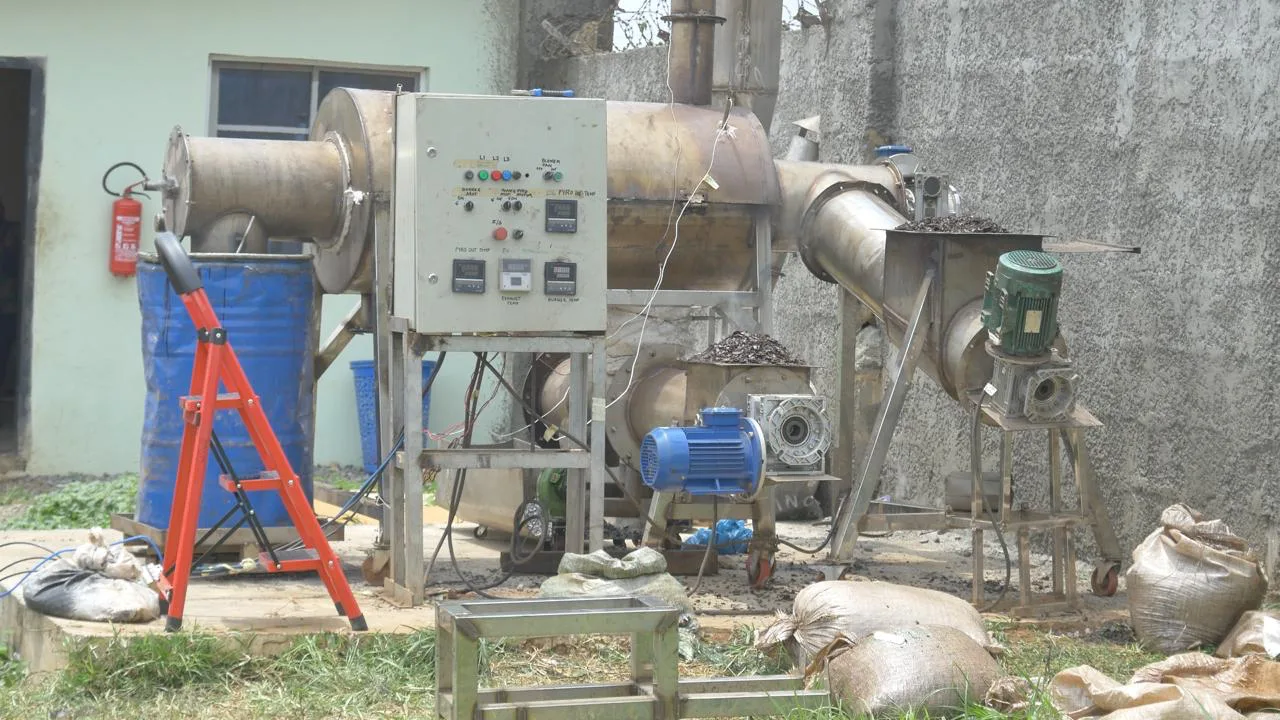
Particle size matters too. Differences in the size and shape of biomass pieces can influence how heat moves through the material and how evenly it is processed.
This is why understanding the material arriving at a facility is so important. Even when two factories work with the same type of agricultural residue, differences in its condition and preparation can influence their production outcomes.
A successful production process begins with knowing what is actually entering the system.
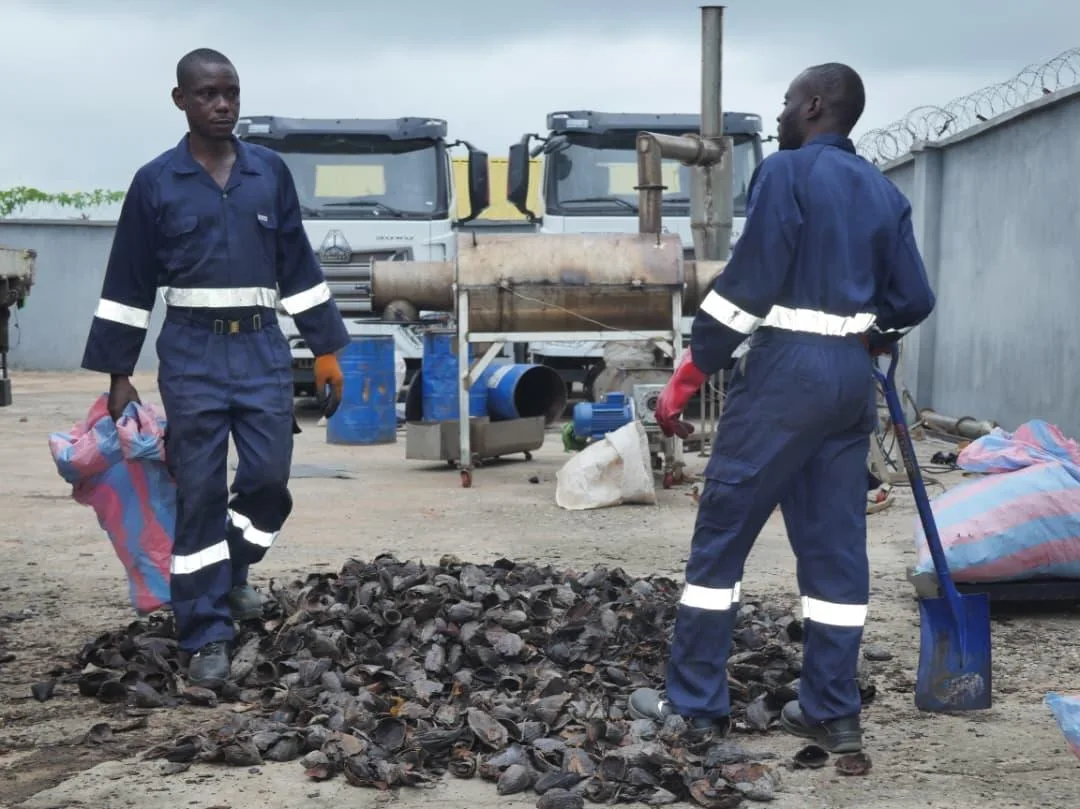
Why does the difference matter to the people buying biochar?
It is easy to assume that once biomass has been converted into biochar, the product is ready for any application.
In reality, biochar is not a single uniform material. Its properties influence how it performs, and different industries have different requirements.
In agriculture, factors such as pH, nutrient interactions, porosity and water-retention characteristics can influence its suitability for particular soils and crops.
In water treatment, surface properties and adsorption capacity become important when assessing its ability to capture specific contaminants.
For carbon removal, the amount of carbon contained in the biochar, its stability and the evidence supporting its production and lifecycle are critical considerations.
A manufacturer cannot simply describe its product as biochar and assume that every potential buyer will find it suitable.
Testing and characterisation help establish what the material actually contains, how it behaves and which applications it may be appropriate for.
This is also why two biochar products made from the same biomass can have different commercial prospects.
Producing biochar is one thing. Producing it consistently is another.
As demand for biochar develops across agriculture, industry and carbon removal, production facilities will face an increasingly important challenge: delivering a product with characteristics that can be understood, measured and reproduced.
This requires more than selecting an abundant biomass source.
It involves understanding the material, managing its moisture content, controlling the production environment and monitoring the conditions that influence carbonisation.
At Biochar Industrial Group (BIG), these considerations are central to developing production processes around the biomass available at partner facilities. Understanding the material, managing moisture and using controlled oxygen flow to support consistent carbonisation are important parts of this approach.
The wider lesson is that biochar production is not simply about how much biomass a factory can process. It is about how effectively that material can be transformed into a product with measurable characteristics and a clear potential application.
Two factories may start with the same agricultural residue. They may even use similar production technologies, but the quality of their decisions, the control of their processes and their understanding of the material can determine just how different the final results become.
REFERENCES
- Tomczyk, A., Sokołowska, Z., & Boguta, P. (2020). Biochar physicochemical properties: Pyrolysis temperature and feedstock kind effects. Reviews in Environmental Science and Bio/Technology, 19, 191–215 - https://link.springer.com/article/10.1007/s11157-020-09523-3
- Leng, L., & Huang, H. (2018). An overview of the effect of pyrolysis process parameters on biochar stability. Bioresource Technology, 270, 627–642 - https://www.sciencedirect.com/science/article/abs/pii/S0960852418312835?via%3Dihub
- Ippolito, J. A., Cui, L., Kammann, C., et al. (2020). Feedstock choice, pyrolysis temperature and type influence biochar characteristics: A comprehensive meta-data analysis review. Biochar, 2, 421–438 - https://link.springer.com/article/10.1007/s42773-020-00067-x