Inside a cashew processing factory, there is a familiar scene. Workers carefully separate the kernels from their hard outer shells. The kernels are cleaned, graded and prepared for markets around the world. But beside the processing line, something else is accumulating: piles of discarded shells.
For years, these shells were one of the less attractive parts of the cashew business. They occupied valuable factory space, required handling and could cost processors money to dispose of. Yet inside those same shells is an oil used by chemical manufacturers, and the remaining material can become feedstock for industrial energy and biochar production.
So, while the kernel makes its way to the market, where exactly do the shells go?
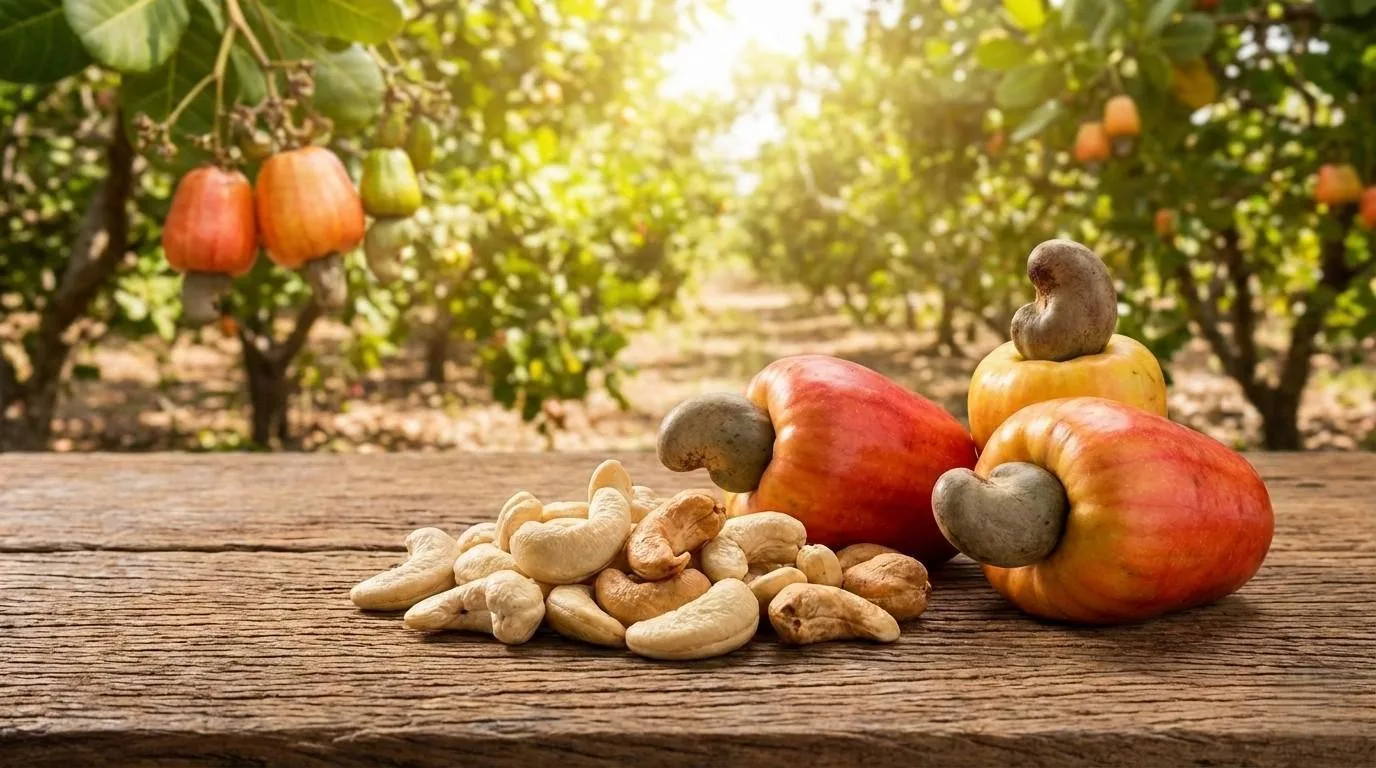
The problem with what gets left behind
Côte d'Ivoire produced approximately 1.55 million tonnes of raw cashew nuts in 2025. Of this, 659,579 tonnes were destined for local processors. As more of the country's harvest is processed domestically, the volume of material left behind is becoming harder to overlook.
The reason is simple: cashew shells account for roughly 70% of a raw nut's weight. That means processing creates a substantial stream of shells alongside the kernels.
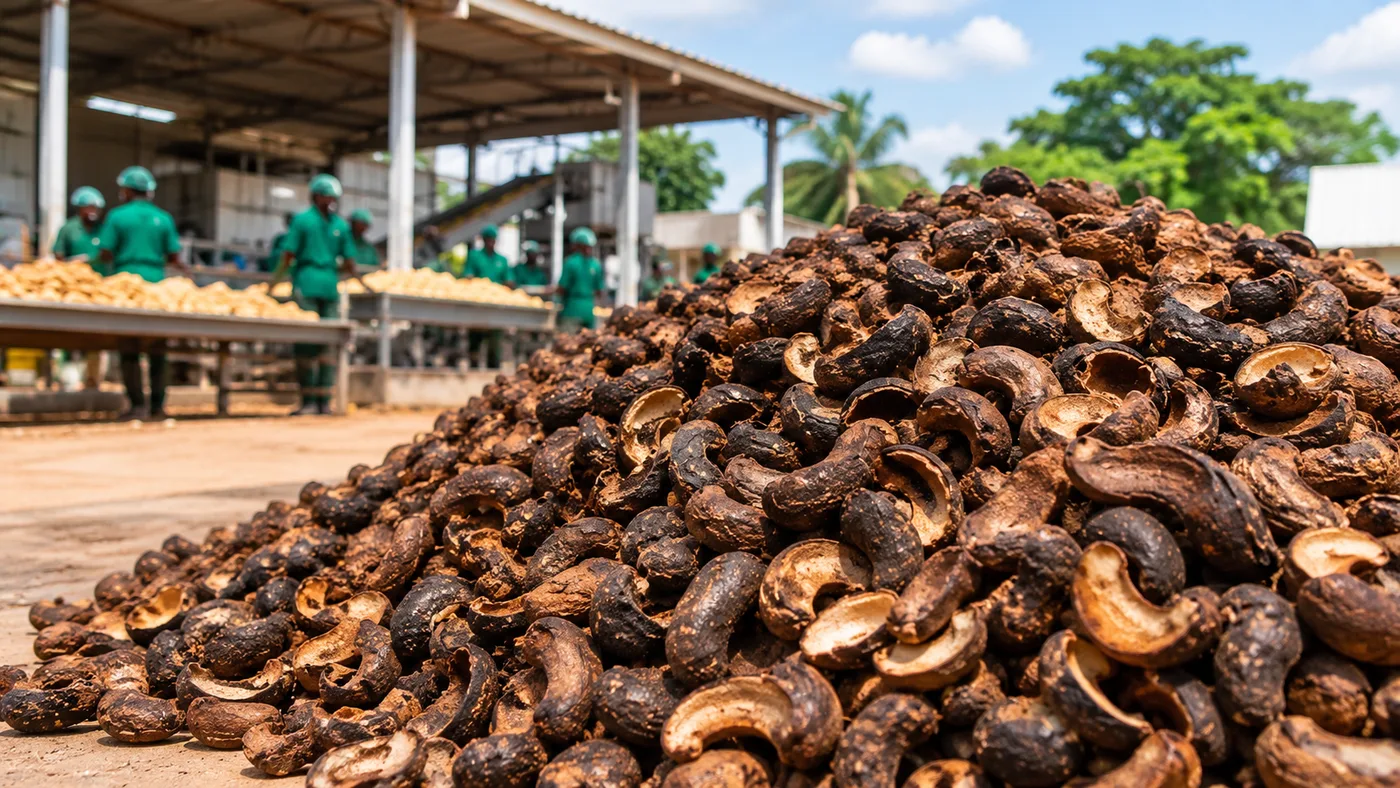
A 2020 TechnoServe assessment described the economic burden this created for Ivorian processors. At the time, some were paying approximately 2,000 CFA francs per tonne to dispose of their shells. That figure is historical, but it illustrates how a by-product could become an additional operating expense rather than a source of income.
The shells, however, contain something that manufacturers can use: cashew nut shell liquid, commonly known as CNSL.
First, the oil. Then, the remaining shell.
CNSL is a dark, viscous liquid found within the cashew shell. It can be extracted and processed into ingredients for industrial products, including paints, varnishes, resins, adhesives and friction materials.
For a processor, this creates another possible revenue stream from a material that might otherwise have been discarded. For manufacturers, it provides a plant-derived raw material for products that would traditionally rely on other chemical inputs.
But extracting the oil does not make the shell disappear.
What remains is known as de-oiled shell cake. It is a different material from the original raw shell, and it needs its own market. This is where another industry enters the picture.
When the shells become biochar
One destination for suitable shell residues is pyrolysis. In this process, biomass is heated in an oxygen limited environment, producing biochar and other outputs depending on the technology and operating conditions.
This is no longer just a possibility being discussed in Côte d'Ivoire.
In June 2026, an industrial biochar facility developed by Valency International, with Revata Carbon involved, was inaugurated in Attinguié, near Anyama. The facility is designed to process approximately 20,000 tonnes of cashew shell cake annually, producing close to 6,000 tonnes of biochar.
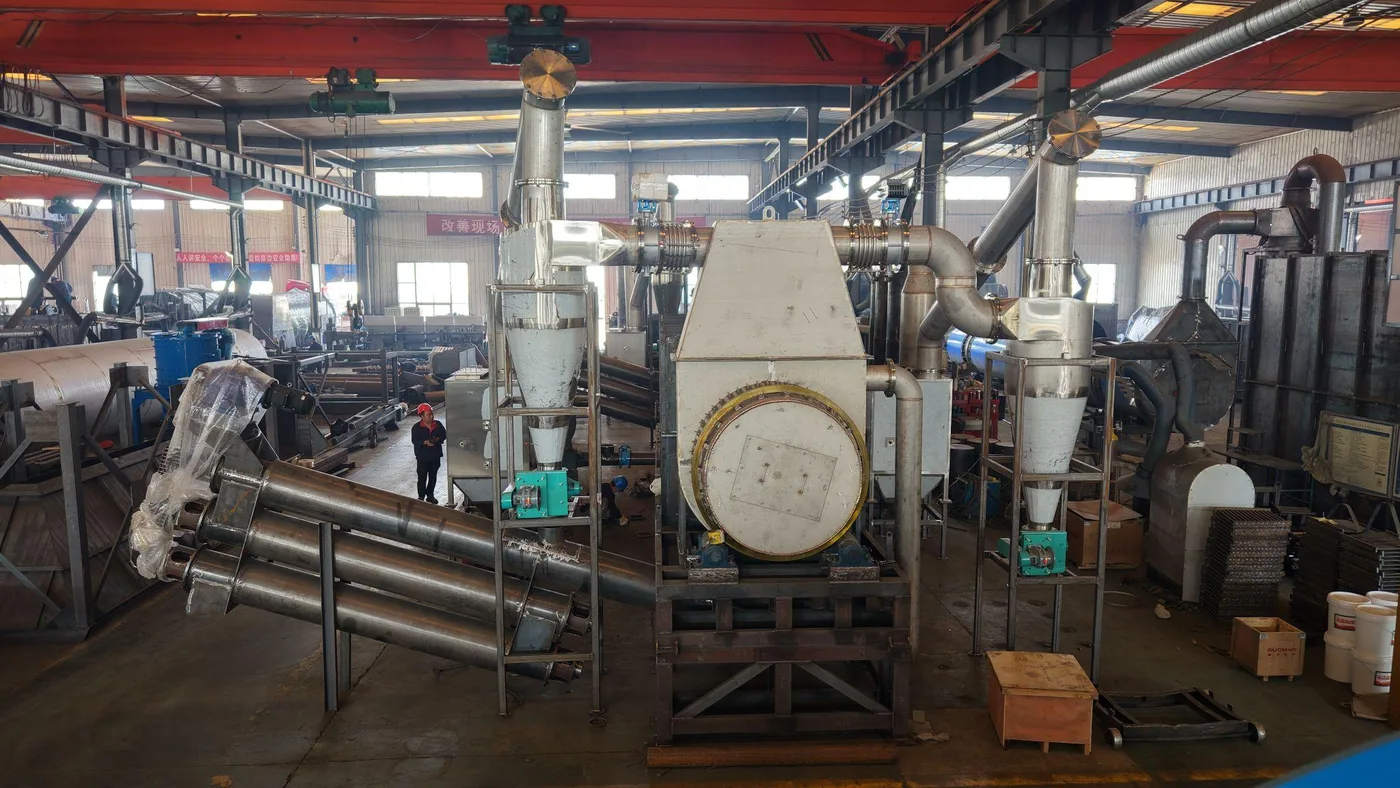
The resulting biochar can be used in agricultural applications. Depending on its properties and how it is applied, it can help improve soil conditions and water retention, while contributing to longer term carbon storage.
It creates an interesting connection between two industries: a by-product from food processing can become an input for soil improvement and biochar is not the only market showing interest.
The buyers are looking at different things
In September 2026, Essar Biofuels announced plans for a proposed investment of approximately $75 million in Côte d'Ivoire to develop cashew shell processing and cardanol production. The announcement followed a memorandum of understanding involving Essar Biofuels, CEPICI and the Cotton, Cashew and Shea Council.
Cardanol is derived from CNSL and is used in industrial applications such as coatings, adhesives and resins. The proposed project signals further interest in extracting more value from cashew by-products locally. It is important to note that this is an announced investment proposal, not confirmation that the facility is already operating.
Energy users also offer another potential outlet for suitable shell material. Cashew shells can be used as biomass fuel, including in some industrial heating applications. However, their oil content and processing requirements can affect how suitable they are for a particular energy system.
This means the different industries are not necessarily looking for exactly the same product. One buyer may want raw shells for oil extraction; another may need de-oiled cake for biochar production; an energy user may require material that meets specific fuel requirements.
So, what makes a shell worth buying?
This is where the commercial picture becomes more interesting.
There is no single price that applies to every tonne of cashew shells in Côte d'Ivoire. A shell that costs a processor money to dispose of in one location may attract a buyer somewhere else. Its value depends on what the buyer can do with it and what it costs to get it there.
Several details can change the economics:
- Moisture: Wet material may require additional drying before it can be processed.
- Oil content: Raw shells and de-oiled shell cake serve different purposes and attract different buyers.
- Cleanliness: Soil, stones and other contaminants can affect processing and product quality.
- Volume and consistency: Industrial buyers often need dependable quantities, not occasional deliveries.
- Transportation: Distance, loading arrangements and responsibility for transport can make a seemingly attractive offer less profitable.
The alternative buyer matters, too. A biochar producer is not competing only with other biochar producers. It may be competing with a chemical processor, a biomass fuel user or another industrial operation seeking the same feedstock.
That is why a headline price alone tells only part of the story. The material's condition, intended use, location and delivery terms all matter. Any quotation should be assessed against those details, rather than treated as a universal market rate.
The story doesn't end with the kernel
Côte d'Ivoire's cashew industry is showing that the value of processing does not have to stop when the kernels are removed. The shells can move into chemical production, energy applications or biochar manufacturing, depending on their condition and the infrastructure available to use them.
But turning a residue into a commercial product takes more than finding a possible application. It requires suitable processing technology, consistent feedstock, quality control and buyers who can use the material.
For Biochar Industrial Group, this is part of a bigger conversation about industrial biomass utilisation: how materials left behind by one industry can become useful inputs for another.
The next time a cashew kernel leaves a factory, it is worth asking what happens to the shell. Increasingly, that may be where another business opportunity begins.
REFERENCES
- TechnoServe. (n.d.). Cashew Shells: From Waste to Energy & Profit.https://www.technoserve.org/wp-content/uploads/2020/05/TechnoServe-Cashew-shells-for-energy.pdf?utm
- Government of Côte d'Ivoire. (2026). Filière anacarde : Le gouvernement poursuit la valorisation locale pour renforcer les revenus des acteurs.https://www.gouv.ci/actualite/filiere-anacarde-le-gouvernement-poursuit-la-valorisation-locale-pour-renforcer-les-revenus-des-acteurs-4361?utm
- Ministry of Commerce, Industry and Handicrafts, Côte d'Ivoire. (2026, June 19). Inauguration of the Industrial Biochar Facility in Attinguié.https://commerce.gouv.ci/actualite/275?utm
- CEPICI. (2026, September 15). Essar Biofuels Announces Proposed $75 Million Investment in Côte d'Ivoire.https://www.cepici.ci/actualite-page-details/263?utm
- CSIR-National Institute for Interdisciplinary Science and Technology. (n.d.). Cashew Nut Shell Liquid and Derivatives (CNSL).https://www.niist.res.in/cashew-nut-shell-liquid-and-derivatives-cnsl?utm
- Biochar and Soil Water Dynamics. (2024).https://link.springer.com/article/10.1007/S42773-024-00323-4?utm